
Reciters Library
The Mushaf TV library features a selection of the most renowned reciters from the Islamic world, and we are continuously working to update and expand it.
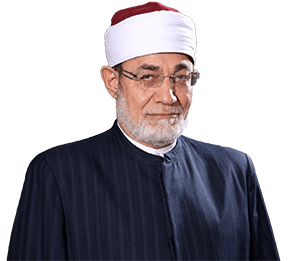
Ahmed El Maasarawy
Hafs ʿan ʿAsim
Sheikh Dr. Ahmed Isa Hassan Al-Maasarawi is among the leading authorities on Quranic qiraat in the modern era, the former Grand Sheikh of the Egyptian Institutes of Quranic Readings, and one of the foremost scholars specialized in the Quran and its sciences. Born in Dakahlia Governorate, Egypt, in 1953, he memorized the Quran at a young age and studied the readings under senior scholars, becoming one of the most notable certified reciters. He combined expertise in qiraat and hadith, served as a professor at Al-Azhar University, and dedicated himself to teaching, granting ijazah, and reviewing the Book of God. He has played a prominent role in promoting precision in Quranic recitation and training reciters and students inside and outside Egypt. Among his notable contributions is founding the Mushaf al-Ummah project, a large initiative aiming to produce and document the entire Quran with the ten qiraat and their twenty riwayat.
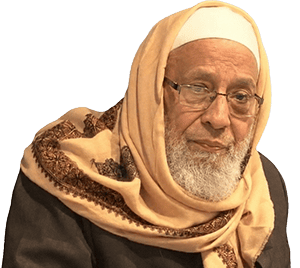
Muhammad Usman Mansoorpuri
Hafs ʿan ʿAsim
Shaykh Muhammad Uthman Mansoorpuri, a distinguished Indian scholar and Qur’an reciter, was among the leading figures of the Deobandi school in the modern era. He was born in the town of Mansoorpur, Muzaffarnagar district, India, on 12 August 1944, and grew up in a religious and scholarly environment. He pursued his religious studies at Darul Uloom Deoband, one of the oldest and most renowned Islamic seminaries in the Indian subcontinent. He excelled in the sciences of the Quran, qiraat and tajwid, and was also recognized for his stature in the study of hadith. He taught at Darul Uloom Deoband, delivering courses in hadith, and was among its senior faculty. He held prominent scholarly and da’wah roles, including service in the administration of Darul Uloom Deoband and the presidency of Jamiat Ulama-e-Hind, one of the largest and oldest civil Islamic organizations in India, in addition to his concern for Muslim affairs and his service to da’wah and religious education. He was known for his dignity, knowledge, and dedication to the Quran and the Sunnah, leaving a positive impact on his students, admirers, and the scholarly institutions he served. He passed away on 21 May 2021, after a life filled with scholarly and da’wah contributions. May Allah have abundant mercy on him and reward him generously for his service to Islam and the Muslims.
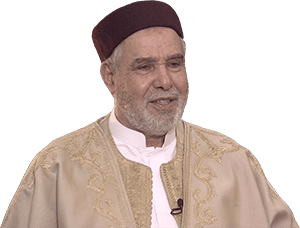
Doukali Mohamed Al-Alam
Qalun ʿan Nafiʿ
Sheikh al-Dukkali Muhammad al-Alim was born in 1949 in the village of Awlad al-Alim in the Libyan city of Msallata. He received his early Qur’anic education from his father at the zawiya of Sheikh Muhammad al-Alim. He joined the al-Asmar Institute in Zliten, where he completed memorization of the Qur’an, then moved to Tripoli to continue his religious studies at the Malik ibn Anas Institute, completing the primary, preparatory, and secondary stages there. He obtained the General Teachers Diploma in 1972 and worked as a teacher at the religious preparatory school in public education. In 1978 he earned the licentiate degree from the Islamic University in al-Bayda, Department of Sharia and Law. He began his career as a teacher, then served as a khatib, imam, and Qur’an teacher at Balamīn Mosque in Tripoli. Many Qur’an memorizers graduated under his supervision, most of whom now teach memorization across various regions of Libya. He also taught the Qur’an at the Islamic Call College of the Islamic Call Society in 1994. He was commissioned by Quran Radio to lead the night prayers (Qiyam) at Moulay Muhammad Mosque, whose rites are broadcast annually on Libyan television and radio and on Quran Radio. He served as Director General of Legal Affairs at the General Authority of Endowments from 1998 to 2000, after which he devoted himself to the mission of the mosque.
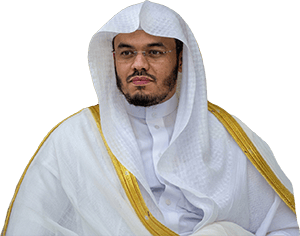
Yasser Al Dosari
Hafs ʿan ʿAsim
Sheikh Yasser bin Rashid Al-Dosari is the imam and khatib of Al-Masjid al-Haram and is regarded as one of the foremost reciters and imams in the Muslim world. He was born in Al-Kharj Governorate and grew up in a blessed scholarly environment. He then continued his academic path, earning a bachelor’s degree from the College of Sharia at Imam Muhammad ibn Saud Islamic University, followed by a master’s in comparative fiqh from the Higher Judicial Institute at the same university, and then a PhD in comparative fiqh from the same institute. He also serves on the teaching staff at King Saud University and has an active scholarly and outreach presence, in addition to membership in several scholarly associations. Sheikh Yasser Al-Dosari studied under a number of leading scholars, including Sheikh Abdullah ibn Jibreen, Sheikh Abdulaziz ibn Abdullah Al Sheikh, and Sheikh Saleh Al-Fawzan. He is renowned for his melodious voice and humble, moving recitation, and has become one of the most famous reciters in the Muslim world, earning widespread affection and great acceptance among Muslims across the globe.
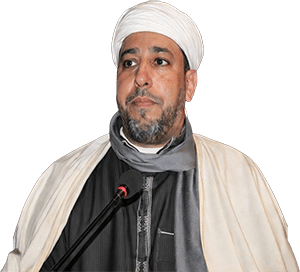
Rashid Belalia
Warsh ʿan Nafiʿ
Sheikh Rachid Belaalia is one of the prominent Quranic voices in Algeria. He was born in 1973 in Algiers. He began his career in religious and patriotic chanting, then devoted himself to serving the Book of God. He excelled in reciting the Quran according to the Warsh narration from Nafi and became well known in this field. His voice gained early exposure through the Algerian Holy Quran Radio, with which he became associated thanks to his famous nasheed (Fatahna bismi Fattah lifathi al-khayr unwan), a work that was widely received by the public. His Quranic recordings then followed, and he became known for his murattal mushaf recordings and impactful recitations, becoming a familiar name among lovers of Quranic recitation in Algeria and beyond.
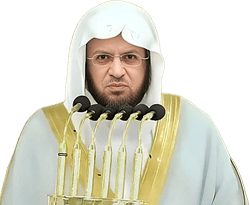
Abdul Mohsen Al-Qasim
Hafs ʿan ʿAsim
Shaykh Dr. Abd al-Muhsin bin Muhammad Qasim, the imam and khatib of Al-Masjid an-Nabawi al-Sharif, is among the leading scholars who grew up in a household of knowledge and piety. He memorized the Noble Qur’an at an early age and began receiving isnad (chains of transmission) at fourteen. He became known for his special dedication to the Qur’anic sciences—recitation, ijazah, and teaching; he read to leading Qur’an reciters and obtained numerous ijazahs in the Qur’an, reaching sixteen in number, with an elevated chain such that it is said there are only twenty-eight transmitters between him and the Prophet ﷺ in his Qur’anic isnad. His paths and chains are diverse, amounting to 1728 routes. He held a daily session in Al-Masjid an-Nabawi for Qur’an instruction and granting ijazahs to students, in addition to his overall supervision of the Qur’an Department at the Prophet’s Mosque and his revival of Qur’an circles there. Along with his authorship and scholarly services related to the Qur’an—such as his books Gharib al-Qur’an and The Easiest Method for Memorizing the Noble Qur’an—this has made him a distinguished figure in serving the Book of Allah and its sciences through teaching, transmission, and foundational scholarship.
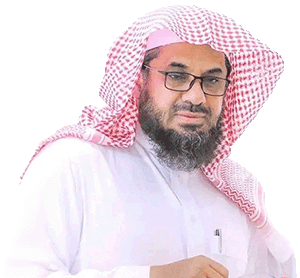
Saud Al Shuraim
Hafs ʿan ʿAsim
Sheikh Saud bin Ibrahim bin Muhammad Al-Shuraim was born in Riyadh in 1966 (1386 AH) and is regarded as one of the most prominent Imams of the Grand Mosque in Mecca and a leading jurist in Saudi Arabia. He enrolled in the College of Fundamentals of Religion at Imam Muhammad ibn Saud Islamic University, graduating in 1409 AH from the Department of Creed and Contemporary Doctrines. He then continued at the High Institute of Judiciary, obtaining a master’s degree in 1413 AH, and completed a PhD in comparative jurisprudence at Umm Al-Qura University with highest distinction in 1416 AH. He was appointed Imam and khatib of the Grand Mosque by royal decree in 1412 AH and was assigned to teach there in 1414 AH. He also briefly served as a judge at the Grand Court in Mecca. He served as a professor in the Department of Judiciary at the College of Sharia at Umm Al-Qura University, rising through the ranks to full professorship in 1430 AH. He also held the post of Dean of the College of Sharia and Islamic Studies, and then Dean of the College of Judicial Studies and Regulations. Combining imamate at the Grand Mosque, university teaching, and authorship in jurisprudence and its foundations, he became a distinguished figure in scholarly and da‘wah circles.
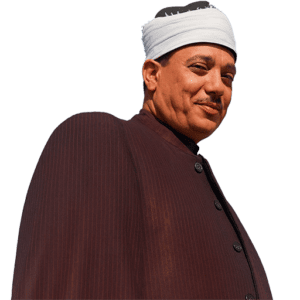
Abdul Basit Abdul Samad
Hafs ʿan ʿAsim
Sheikh Abdul Basit Abdus Samad was born in the village of al-Mara’aza in Qena Governorate, Upper Egypt, in 1345 AH / 1927 CE, and is regarded as one of the most renowned reciters of the Noble Qur’an in the Islamic world. From a young age he became known for the power and sweetness of his voice and its distinctive timbre, combining beauty, strength, and spirituality. He memorized the entire Qur’an at an early age and became one of the leading pillars of the Egyptian school of recitation, earning the epithet (The Voice of Mecca.) He joined Egyptian Radio, then was appointed the official reciter at Imam al-Shafi’i Mosque, and later at Al-Hussein Mosque in Cairo. He traveled to dozens of countries to spread the Book of God, leaving an enduring imprint on Muslims in the East and the West. His recordings of the Qur’an are among the most widely circulated and preserved in the Islamic world, and with his voice he immortalized a unique school of recitation that remains a reference for generations after him. He passed away in 1409 AH / 1988 CE.
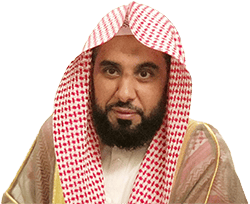
Abdullah Al Juhani
ad-Duri ʿan Abi ʿAmr
Born in Al-Madinah Al-Munawwarah in 1396 AH, he memorized the Qur’an at a young age at Masjid al-Ashraf and won joint first place in the international competition in Mecca at the age of sixteen. He graduated from the College of Qur’an at the Islamic University, then worked as a teaching assistant at Umm Al-Qura University, where he earned a master’s degree in Tafsir in 1430 AH and a PhD in 1433 AH. He led the congregation at Masjid al-Qiblatain and then at Al-Masjid an-Nabawi at the age of twenty-one, and later served as an imam at Quba Mosque for four years. A royal decree appointed him as an imam at Al-Masjid al-Haram for the Tarawih prayers in 1426–1427 AH, after which he continued in his duties. He received Qur’anic ijazahs from leading masters of recitation such as Shaykh al-Zayyat, Shaykh Ibrahim al-Akhdar, Dr. Ali al-Hudhaifi, and Shaykh Muhammad Ayyub, who praised the quality of his performance and recitation.
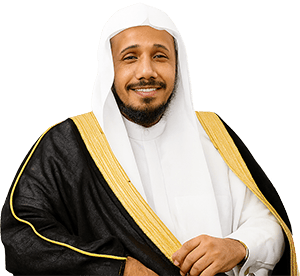
Abdullah Basfar
Hafs ʿan ʿAsim
Sheikh Abdullah bin Ali Basfar, born in Jeddah (1381 AH / 1961 CE), is regarded as one of the leading Qur’an reciters and preachers in Saudi Arabia. He memorized the Qur’an at an early age, received an ijazah in the Hafs narration, and earned a PhD in Islamic jurisprudence (fiqh) from Umm Al-Qura University in Mecca. He also served as a professor at King Abdulaziz University, was the Secretary-General of the World Association for the Memorization of the Holy Qur’an, and led prayers as an imam and khatib in Jeddah. He is known for his devout, humble voice and beneficial writings in Qur’anic sciences and the Prophetic sīrah. By combining university teaching, service to the Qur’an, and charitable work, he became one of the influential figures in the Muslim world.
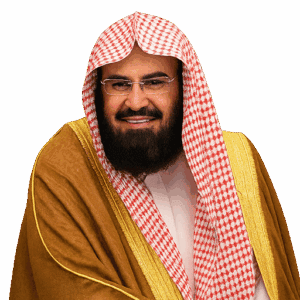
Abdul Rahman Al Sudais
Hafs ʿan ʿAsim
Sheikh Abdulrahman bin Abdulaziz Al-Sudais, born in Riyadh in 1382 AH (1962 CE), is regarded as one of the foremost Quran reciters and preachers in the Muslim world. He memorized the Quran at a young age and advanced in his studies, earning a PhD in Usul al-Fiqh from Umm Al-Qura University in Makkah. He was appointed Imam and Khatib of the Grand Mosque in 1404 AH, and later served as the General President for the Affairs of the Grand Mosque and the Prophet’s Mosque. Known for his distinctive voice and impactful style in recitation and oratory, he has become a steadfast figure in the service of the Quran and da’wah, and one of the prominent symbols of the Muslim ummah.
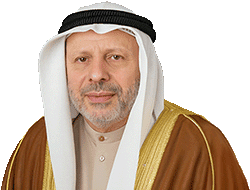
Ahmed Al Tarabulsi
Hafs ʿan ʿAsim
Sheikh Qari Ahmad Khidr al-Tarabulsi was born in Beirut in 1947 and has resided in Kuwait since 1963. A leading contemporary Qur’an reciter, he completed memorization of the Qur’an in his youth in 1962, received an ijazah in the narration of Hafs ‘an ‘Asim from Sheikh Ma’mun Katibi, and became known for precision of performance, adherence to tajwid, and participation in recitation competitions—all attesting to his devout recitation and melodious voice.
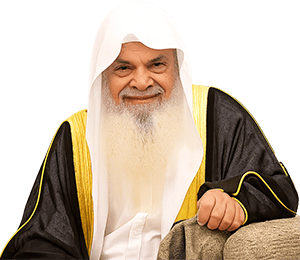
Ali Al Huthaify
Shuʿbah ʿan ʿAsim, Qalun ʿan Nafiʿ, Hafs ʿan ʿAsim
Sheikh Ali bin Abdulrahman Al-Hudhayfi, born in the village of Al-Qarn Al-Mustaqim south of Mecca in 1366 AH (1947 CE), is regarded as one of the foremost Qur’an reciters and scholars in Saudi Arabia and the Islamic world. He memorized the Qur’an at an early age and received ijazahs in the canonical readings from senior shaykhs. He earned his master’s and doctorate from Al-Azhar University in fiqh and siyasa shar‘iyya, and served as a professor at the Islamic University of Madinah. He led prayers and delivered sermons at Masjid Quba and then at Al-Masjid al-Haram, and has been Imam and Khateeb of Al-Masjid an-Nabawi since 1402 AH to the present. He has also held several posts, including chairing the scientific committee for the review of the Madinah Mushaf and serving on committees of the King Fahd Complex for the Printing of the Holy Qur’an. By combining university teaching, service to the Qur’an, and institutional work, he has become an influential figure in the Islamic sphere.
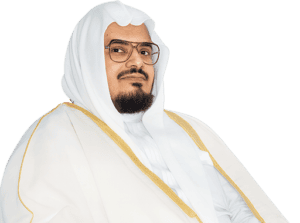
Ali Jaber
Hafs ʿan ʿAsim
Sheikh Ali bin Abdullah Jaber al-Sa‘idi, born in Jeddah in 1953 (1372 AH), was one of the prominent imams of the Grand Mosque in Mecca, known for his moving voice and humble recitation. He taught comparative fiqh at King Abdulaziz University in Jeddah and served as imam of Masjid al-Ghamama in al-Madinah for two years. He earned a master’s degree in fiqh after being appointed a judge in the Maysan district near Ta’if, then received his PhD with highest honors for a dissertation in comparative jurisprudence titled “The Jurisprudence of al-Qasim ibn Muhammad ibn Abi Bakr al-Siddiq.” He was appointed a lecturer at the College of Education at the Medina branch of King Abdulaziz University, in the Department of Arabic Language and Islamic Studies, contributing to academia alongside his da‘wah work. He passed away on Wednesday evening, 12 Dhu al-Qa‘dah 1426 AH (14 December 2005), in Jeddah, and was buried in the Al-Shara’i Cemetery in Mecca. His influence remains present in the hearts of worshippers and listeners across the Islamic world.
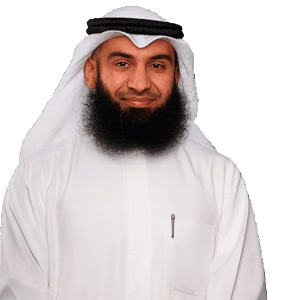
Bader Al Ali
Hafs ʿan ʿAsim
Sheikh Badr bin Ahmad Al-Ali is among the Quran reciters and preachers in the State of Kuwait. He recites according to the riwayah of Hafs ‘an ‘Asim and has taken part in recording mushaf recitations and various audio programs. He served as imam and khatib at the State Grand Mosque, leading worshippers in Tarawih and Qiyam, and is known for teaching the Ten Qira’at at the same mosque. Numerous recordings of his have been published, including Friday sermons and tartil recitations, and he has participated in several Quran competitions inside Kuwait and abroad, combining his work in imamate and Quranic education with contributing to the spread of recitation through the media.
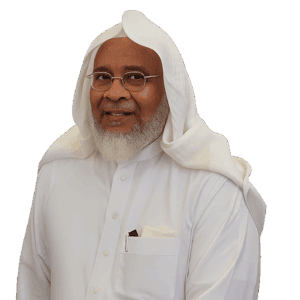
Ibrahim Al Akhdar
Hafs ʿan ʿAsim
Sheikh Ibrahim bin al-Akhdar al-Qayyim, born in al-Madinah al-Munawwarah in 1364 AH, is regarded among the reciters and scholars in Saudi Arabia. He began his career as a teacher in industrial/vocational education, then moved to teaching at the Ubayy ibn Ka‘b Qur’an Memorization School in al-Madinah al-Munawwarah. He also served as an imam in al-Masjid al-Haram and took part in leading prayers in al-Masjid an-Nabawi. He was appointed assistant professor at the College of the Noble Qur’an and the College of Da‘wah at the Islamic University of Madinah, and he also taught at the Scientific Institute for Islamic Da‘wah affiliated with Imam Muhammad bin Saud Islamic University. He is a member of several committees and associations, including the Qur’an Memorization Society, the Charitable Society for Social Services, and local and international judging panels for the Qur’an competition organized by the Ministry of Islamic Affairs, Dawah and Guidance—combining university teaching, service to the Qur’an, and participation in institutional and social work.

Khaled Al Mahna
Hafs ʿan ʿAsim
Sheikh Khalid bin Sulayman Al-Muhanna, born in Al-Ahsa in 1396 AH (1976 CE), is among the Qur’an imams at the Prophet’s Mosque in Al-Madinah Al-Munawwarah and a faculty member at Imam Muhammad bin Saud Islamic University in Riyadh, where he was appointed a teaching assistant in the College of Fundamentals of Religion. He led prayers and recitation at the Prophet’s Mosque during Ramadan 1436 AH, and was officially appointed an imam of the mosque on 14 Safar 1441 AH. His voice became widely known when a murattal Mushaf recorded in his recitation was released in 1442 AH. His work combines academic service, Qur’an recitation, and contributions to the global dissemination of tilawah.
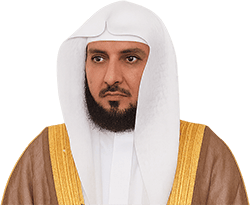
Maher Al-Muaiqly
Hafs ʿan ʿAsim
Sheikh Maher bin Hamad bin Mueaqil Al-Muaiqly Al-Balawi, born in Madinah in 1969, has served as Imam and Khatib of Al-Masjid al-Haram since 1428 AH. He holds a master’s degree in the jurisprudence of Imam Ahmad from Umm Al-Qura University, and a PhD from the same university in Shafi‘i jurisprudence, graduating with highest distinction and first-class honors. He began his career as a mathematics teacher, then worked in student counseling in Makkah, before entering academia as an assistant professor at Umm Al-Qura University. He was assigned as Imam of Al-Sa‘di Mosque, and was later commissioned to lead prayers in the Prophet’s Mosque during Ramadan of 1426–1427 AH. He subsequently led Tarawih and Tahajjud in the Haram, before being officially appointed an Imam of the Haram in 1428 AH. In 2006, he recorded the Murattal Mushaf for Saudi Radio and Television. He has combined religious education, academic work, and preaching in the holiest place on earth.
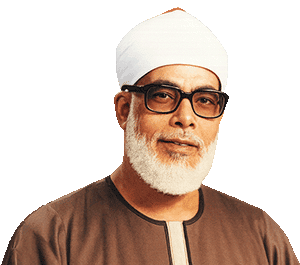
Mahmoud Al Hussary
Hafs ʿan ʿAsim
Sheikh Mahmoud Khalil Al-Husary, born in the village of Shubra al-Namlah in Tanta (1336 AH – 1917 CE), is regarded as one of the most prominent Qur’an reciters in Egypt and the Islamic world. He memorized the Qur’an at an early age, specialized in the qira’at, and was appointed Inspector of the Egyptian recitation institutes in 1957, then Deputy of their Sheikhdom, before becoming in 1961 the Grand Sheikh of the Egyptian recitation institutes. He was the first to record the complete mushaf in tartil worldwide according to the narration of Hafs ‘an ‘Asim, and later recorded according to the narrations of Warsh, Qalun, and al-Duri. He was also the first to produce the teaching mushaf and the explained mushaf. He was sent to represent Egypt at conferences and on overseas visits to India, Pakistan, Kuwait, the United States, France, and Britain; he recited the Qur’an at the United Nations in 1977, and his recitation led a number of foreigners to embrace Islam after hearing him. He died on 24 November 1980, and his recordings and tartil mushafs remain among the most enduring tributes to his service to the Qur’an.
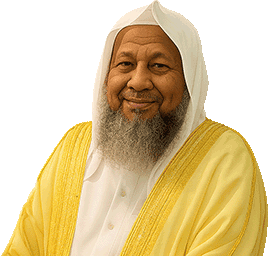
Mohammed Ayoub
Hafs ʿan ʿAsim
Shaykh Muhammad Ayyub bin Muhammad Yusuf bin Sulaiman Umar, born in Makkah in 1372 AH (1952 CE), is regarded as one of the most prominent imams of Al-Masjid an-Nabawi in Al-Madinah al-Munawwarah. He enrolled at the Islamic University and graduated from the College of Sharia in 1396 AH, then obtained his MA and PhD from the College of the Qur’an in tafsir and its sciences; both theses focused on the narrated reports of Sa’id ibn Jubayr in tafsir. He worked as a teaching assistant and then a faculty member at the College of the Qur’an, was entrusted with overseeing examinations for ten years, and served on the scholarly committee at the King Fahd Complex for the Printing of the Holy Qur’an. He led prayers in several mosques in Madinah, served as imam at Quba Mosque, and was appointed a cooperating imam at Al-Masjid an-Nabawi from 1410 AH to 1417 AH; after many years he returned to lead prayers in Ramadan 1436 AH. He received an ijazah in the recitation of Hafs ‘an ‘Asim from senior shaykhs in Madinah and Egypt. He passed away on Saturday, 9 Rajab 1437 AH (16 April 2016); the funeral prayer was held at Al-Masjid an-Nabawi, and he was buried in Al-Baqi’. He was among the imams who combined university teaching with service to the Qur’an and the imamate.
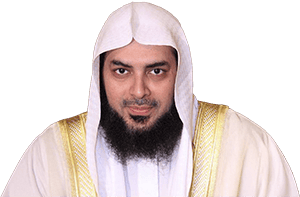
Othman Al Siddiqi
as-Susi ʿan Abi ʿAmr
He serves as Director General of the Charitable Societies for Quran Memorization at the Ministry of Islamic Affairs, in addition to his work as an assistant professor of Sharia sciences at King Fahd Security College. He earned his bachelor’s, master’s, and PhD degrees in comparative fiqh from the Islamic University and Imam University, and holds recognized ijazahs in the seven readings and in the transmissions of Hafs and Shu‘bah, while continuing his studies to complete the ten readings. He has participated in multiple Quranic committees inside and outside the Kingdom, judged and organized international and local competitions, and contributed to establishing Quranic associations at the Ministries of Defense and Interior. His scholarly output spans fiqh, judiciary, and personal status, notably the critical edition of al-Najm al-Wahhaj, studies on the punishment of lashing, issues of marriage, and contemporary jurisprudential questions.

Nourin Mohamed Siddiq
ad-Duri ʿan Abi ʿAmr
Sheikh Noreen Muhammad Siddiq was one of the most prominent Qur’an reciters in Sudan in recent decades, known for his reverent voice, precise delivery, and moving recitation that touched listeners’ hearts inside and outside Sudan. He grew up loving the Qur’an and began memorizing it in the 1990s in a rural setting in North Kordofan State. He then continued his service to the Book of God until he became one of the well-known mosque imams in the capital, Khartoum, leading the Tarawih prayers in several of its major mosques. He was renowned for reciting according to multiple narrations, as well as for his simplicity and humility; his name became associated with devotion and excellence in performance. He passed away in a tragic car accident in 2020 along with a number of memorizers of the Qur’an. His passing left a deep impact on his admirers, and his Qur’anic recordings remain a living testament to his influence and standing in the world of recitation.